







12 Pet-Safe Plants You Can Grow from Seed at Home
If you share your home with a dog or cat, you've probably paused before bringing a new plant inside and wondered: is this actually safe? It's a smart instinct. Plenty of popular plants are dangerous to pets, and the advice you'll find online doesn't always agree, especially when two completely different plants share the same common name. We checked every plant on this list directly against the ASPCA's official toxic and non-toxic plant database, one scientific name at a time. Here are 12 pet-safe plants you can grow from seed, organized by type, plus what to avoid and what to do if your pet eats something they shouldn't.
How to actually verify a plant is pet-safe
The ASPCA Animal Poison Control Center maintains the most complete toxic and non-toxic plant database in the country, and it's the source we used for every entry below. Two things are worth knowing before you start cross-checking plants on your own.
First, "non-toxic" doesn't mean "give them the whole pot." Any plant material, even a totally safe one, can cause mild stomach upset if a pet eats a large amount of it. Non-toxic just means there's no documented poisoning risk, not that it's a recommended snack.
Second, always check the scientific (Latin) name, not the common name. Common names get reused across completely different plants, which is exactly why two flowers that are both called "marigold" land on opposite sides of the safety list (more on that in the flowers section below). When in doubt, search the plant's botanical name on the ASPCA's toxic and non-toxic plants database before you buy seeds.
Pet-safe herbs to grow from seed
Herbs are some of the easiest plants to start from seed, and most of the kitchen staples below are completely safe for dogs and cats.
Basil (Ocimum basilicum)
Basil is non-toxic to both dogs and cats, according to the ASPCA, and it's one of the easiest herbs for a beginner to grow. Pinch the top leaves regularly to keep the plant bushy, and your cat will probably enjoy sniffing it even if she never takes a bite.
Rosemary (Rosmarinus officinalis)
Rosemary is non-toxic and famously low-maintenance once established. It prefers a sunny spot and soil that drains well, and many pet owners grow it specifically because dogs tend to leave the strong, piney scent alone.
Thyme (Thymus vulgaris)
Thyme is non-toxic to dogs and cats and makes excellent low ground cover if you let it spread. Creeping thyme varieties are sturdy enough to handle the occasional paw stepping through the bed.
Sage (Salvia officinalis)
Sage is non-toxic and a great companion plant for a pollinator-friendly garden as well as a pet-friendly one. Established plants are drought-tolerant, so it's a forgiving choice if your watering schedule is inconsistent.
Dill (Anethum graveolens)
Dill is non-toxic to dogs and cats. It grows quickly from seed and self-seeds easily, so don't be surprised if you find volunteer dill popping up nearby next season. It's also a host plant for Black Swallowtail butterflies, so leave a few tiny eggs undisturbed if you spot them.
Lemon Balm (Melissa officinalis)
Lemon balm is non-toxic to dogs, cats, and horses. It's a member of the mint family with a bright, citrusy scent that some cats find irresistible to rub against. Plant it in a container, since like most mints it spreads aggressively in open beds.
Bonus for cat owners: Catnip and Catmint
Catnip (Nepeta cataria) is the classic: most cats find it stimulating, from playful zoomies to a mellow, sedated stretch on the floor, though about three in ten cats don't react to it at all. Catmint (Nepeta faassenii) is its calmer cousin, milder but still appealing for sniffing, gentle play, and the occasional nibble. Both are best treated as an occasional treat rather than an everyday snack, since eating a large amount of either can cause mild stomach upset.
Buzzy's Pet Pantry Cat Garden Grow Kit grows one pot of each in galvanized pails with a tray, so your cat gets a taste of both.

Pet-safe flowers to grow from seed
Calendula (Calendula officinalis)
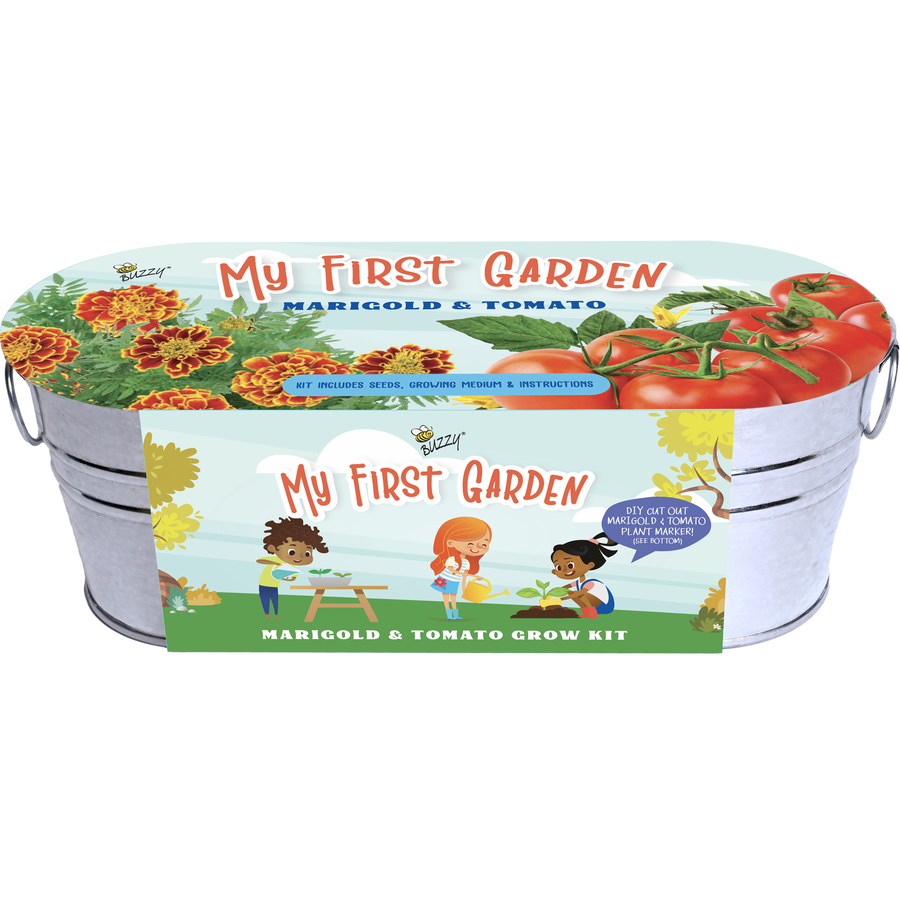
Also called pot marigold, calendula is non-toxic to dogs and cats according to the ASPCA. A quick naming note: there's a completely different, unrelated flower also commonly called "marigold," in the genus Tagetes (the kind sold as French or African marigold at most garden centers). The ASPCA classifies Tagetes marigold as mildly toxic, causing GI upset or skin irritation in some pets. If you want a true marigold look that's also pet-safe, look for Calendula officinalis on the seed packet, not Tagetes.
Sunflower (Helianthus annuus)
Sunflowers are non-toxic to dogs and cats and are about as forgiving a flower as you can grow from seed. They're also a favorite for getting kids involved in the garden, since the seeds are large enough for small hands to plant. Our Kids Sunflower Watering Can Grow Kit makes a fun first hands-on project - it comes with everything you need in a charming watering can planter.

Zinnia (Zinnia elegans)
Zinnias are non-toxic and one of the easiest cut flowers to grow from seed. They bloom quickly and keep producing right up until the first frost if you deadhead spent blooms.
Pet-safe "super greens" worth growing
Barley grass (Hordeum vulgare)
Barley grass is one of the most common bases for store-bought "pet grass" blends, and it's non-toxic for dogs and cats to nibble on. It germinates fast, often within a few days, which makes it a satisfying first seed-growing project if you have kids in the house too.
Chia (Salvia hispanica)
Chia is non-toxic to cats according to the ASPCA, and as a member of the same genus as sage, it shares a similar safety profile for dogs. There isn't as much published safety research on chia specifically as there is on more common cat grasses like wheat or oat grass, so treat it the way you would any new plant: let your pet try a small amount and keep an eye on them.
Plants to absolutely avoid
A pet-safe garden is also about knowing what to keep out. These three are among the most dangerous common plants for pets, according to the ASPCA.
Lilies (Lilium species) are extremely dangerous to cats. Every part of the plant, including the pollen and even the water in a vase, can cause acute kidney failure in cats, sometimes from a very small amount.
Sago palm (Cycas revoluta) is severely toxic to both dogs and cats, primarily affecting the liver. Ingesting just one or two seeds can be fatal without prompt treatment.
Philodendron species contain insoluble calcium oxalate crystals that cause intense oral and GI irritation, drooling, and swelling if chewed. It's rarely fatal on its own, but it's a miserable and avoidable experience for a curious pet.
What to do if your pet eats a plant
If you suspect your pet ate something toxic, don't wait to see if symptoms appear. Remove any plant material still in their mouth if you can do so safely, and try to identify the plant (a photo of the leaf or flower helps a lot). Call the ASPCA Animal Poison Control Center at (888) 426-4435 or your veterinarian right away; a consultation fee may apply, but it's worth it for fast, accurate guidance. Don't try to induce vomiting unless a vet or poison control specifically tells you to, since that can make some types of poisoning worse.
Tips for a pet-safe garden
A few small habits go a long way toward keeping curious pets and your plants both happy.
Choose plant placement with your pet's habits in mind. If your dog likes to dig or your cat likes to climb, keep more delicate seedlings in raised beds or hanging baskets until they're established.
Skip the chemicals. Pesticides and synthetic fertilizers can turn an otherwise non-toxic plant into a risk. Organic methods are the safer choice for any garden your pet has access to.
Give them their own plant to enjoy. If your cat loves to nibble greenery, a dedicated pot of catmint or barley grass often redirects that instinct away from your other plants.
Ready to start growing?
A few of our kits are a natural fit for pet-safe homes, whether you're starting indoors or looking for something a little different.
The Strawberry Windowsill Grow Kit fits on any windowsill and grows a fruit that's non-toxic to both dogs and cats - a satisfying first grow for any beginner.

If you're after something more decorative, the Pansy Soda Can Grow Kit is a cheerful, ASPCA-confirmed pet-safe bloom in a compact, charming planter.

And for something a little more meditative, our Bonsai Tree Grow Kit 4-Pack includes Blue Spruce, Norway Spruce, Black Austrian Pine, and Monterey Cypress - all considered non-toxic to dogs and cats.

And remember, every Buzzy kit comes backed by our Grow Guarantee, so if your seeds don't sprout, we'll make it right.