






How to Grow Mint Indoors From Seed (The Easiest Herb on a Winter Windowsill)

Mint is the forgiving one. Iowa State Extension lists the herbs that cope with a little less light than the rest, and mint is on it by name. Clemson puts it in the group that is happy in partial shade.
That matters if you want to know how to grow mint indoors in winter. Your one good window faces east, the sun clocks off at four, and most herb guides open by demanding six hours of direct sun.
Mint is also quick off the mark, cheap to start, and it bounces back from a haircut. Let us walk through it.
Why mint is a good pick for a windowsill
Three reasons, and they all count for more in January than in July.
First, the light. Iowa State puts the target at four to six hours of direct sun for herbs, then notes that mint will tolerate a little less. Most herbs do not get that footnote.
Second, cutting it helps. With a lot of plants, picking sets them back. With mint, trimming is what makes it fill out. The Royal Horticultural Society puts it plainly: the more you pick, the more they will produce.
Third, it is small to start and perfectly content in a pot. Keeping mint contained is the thing every extension service recommends anyway, so you and the plant are not in an argument about it.

How to grow mint indoors from seed, step by step
This is the method printed on our kits.
- Drop the growing medium pellet into the pot and add water. A tablespoon is enough for a mini pot. Use three quarters of a cup for a tin.
- Fluff it up with a fork once it has swelled.
- Scatter the mint seed on the surface and press it in gently. Leave it uncovered. Mint seed is very fine.
- Put the pot somewhere warm and bright with a bit of air moving past it.
- Keep the growing medium damp all the way through, without letting it go soggy.
- Wait 14 to 21 days.
- Once the seedlings have their second set of leaves, start feeding with half strength plant food. That is the one thing not in the box.
Here are the numbers from the two mint kits, side by side.
| Peppermint Grow Kit, 6 pots | Holiday Mint Grow Kit, 2 tins | |
|---|---|---|
| Sowing depth | Surface, leave uncovered | Surface, leave uncovered |
| Water for the pellet | 1 tablespoon | 3/4 cup |
| Sprouts in | 14 to 21 days | 14 to 21 days |
| Warmth to sprout | 72 to 75 degrees | 72 to 75 degrees |
| Light once growing | Brightest window you have | Brightest window you have |
| Time to a full plant | About 3 months | About 3 months |
| Full grown size | Around 3 feet | Around 3 feet |
Two rows there deserve a second look. Three feet is what a mature mint plant does in open ground, which is a long way from what will happen on your sill. And three months is the run to a full plant. Your first leaves arrive well before that.
Why mint belongs in a pot
If a windowsill is all you have, this section is good news. There is nothing for the plant to escape into, so the thing everyone warns about simply does not apply to you. Skip ahead to the light if you like.
Here is the warning anyway, because one day you may have a balcony or a yard.
Mint travels. It sends out creeping stems, some underground and some along the surface, and new plants pop up wherever those stems settle. In a garden bed, that is how one small plant becomes a patch.
So the advice is unanimous. Utah State says mint is best planted in containers or where roots are confined. Illinois Extension says it is highly suggested that mints be grown in containers above ground. Maryland, NC State, Iowa State, Clemson, UC Extension and the RHS all land in the same place.
Our kits say it too. The instruction on the box is to move the seedling into a larger pot, and specifically not into the ground. If you do put the pot outside one day, stand it on a hard surface, because stems that reach soil will root into it.

How much light does mint really need?
Four to six hours of direct sun is the target, and mint is more relaxed about this than most herbs.
Colorado State Extension gives the clearest window guidance. South or southwest windows are best. East or west will also do. North-facing windows are not bright enough.
Keep the pot close to the glass and the leaves off it. Colorado State warns that foliage touching cold winter glass can get nipped.
If the plant grows long and floppy with big gaps between the leaves, that is the signal for more light. Iowa State, Illinois and Montana State all name the same tell. A cheap clip-on grow light running 12 to 14 hours a day sorts it out.
Temperature is easy. Mint likes roughly what you like. Around 65 to 70 degrees in the day and a little cooler at night suits it fine. Keep it away from a heat vent, which will dry it out faster than anything else in the room.
When can you start picking?
Once the plant is three to four inches tall. Height is the trigger rather than a date on the calendar, because a plant that tall has the roots to recover from a trim.
Utah State, Penn State and University of California Extension all use that same three to four inch threshold.
In practice, sowing to first picking usually runs a couple of months on a windowsill. Two to three weeks of that is just waiting for the sprout. Treat that first snip as the win, not some imagined jar of mint tea in week three.
How do you harvest mint so it keeps producing?
Cut above a pair of leaves, and cut often.
Snipping a stem just above a leaf pair makes the plant branch at that point. Montana State explains it well. One stem becomes two, two become four, and a spindly plant turns bushy.
Two rules keep it going. Oklahoma State and Colorado State both say never take more than a third of the plant at once. And pinch off flower buds as they form, because UC Extension notes that flowering pulls flavor out of the leaves.
Go for the young tips. Illinois Extension says the new growth is the tastiest part.
There is one moment to ignore the one-third rule. If the whole plant gets straggly, cut it right back to about two inches from the base. The RHS says fresh shoots follow within a few weeks.
How big a pot does mint need?
Bigger than the one it started in, once the roots fill it and growth slows down.
Every extension source that names a size says six inches across at minimum. Maryland and NC State go further and suggest 12 to 16 inches for a plant you want to keep for years.
If a pot that size will never fit your sill, do not let it put you off. A six inch pot, trimmed often, keeps a mint plant going happily for a long time. Mint sizes itself to the room you give it.
Maryland explains why the smallest pots get difficult. They dry out faster, they swing in temperature, and once roots fill them the plant above stops growing. That is awkward for an herb that wants steady moisture.
So move the plant up two to four inches at a time, into something with a drainage hole. Repot it once a year or so after that.

What does mint do in winter indoors?
It slows down, and that is normal.
Colorado State notes that indoor plants often go into a resting phase in winter because the light changes. Outdoors, mint dies back over the cold months and returns in spring. Indoors it usually keeps some leaves, though it will grow more slowly and look a little softer than a summer plant.
No need to treat that as a problem. Keep watering lightly, keep it in the brightest spot you have, and it picks up again as the days get longer.
One small kindness. Dry heated air is hard on herbs, so Colorado State suggests a weekly rinse in the sink.
What usually goes wrong
Nothing sprouted. Most often the seed got buried. Mint goes on the surface and stays there. A cold sill is the other usual cause, since the kits want 72 to 75 degrees to get going.
It dried out. Small pots dry quickly. Check with a fingertip each day and keep the growing medium damp.
It got tall and floppy. More light, and start pinching the tips.
It stopped growing. The roots have probably filled the pot. Move it up a size.
And if nothing comes up at all, get in touch and tell us which kit it was. We would rather hear about it than not.
Your first month, in four lines
Week one, sprinkle the seed on top and leave it uncovered. Keep it warm and damp.
Weeks two and three, watch for green and turn the pot every few days.
Week four, feed at half strength once the second set of leaves appears.
Then wait for three to four inches, cut above a leaf pair, and start again. That is the whole loop, and it runs all winter.
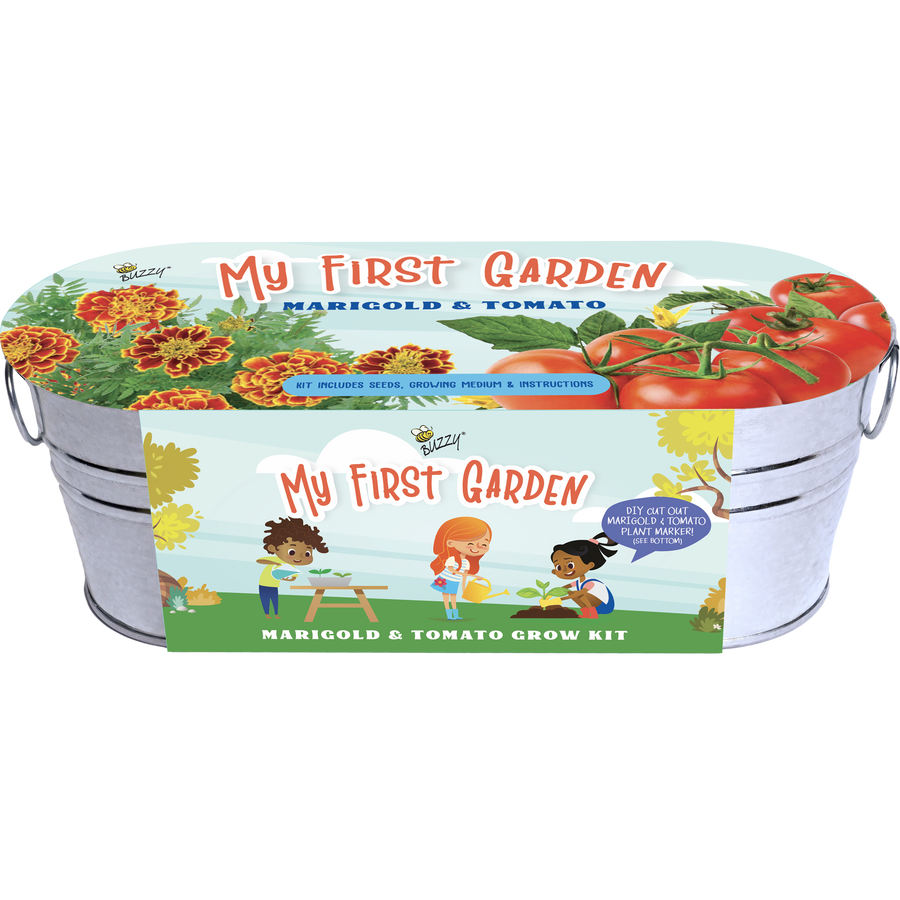
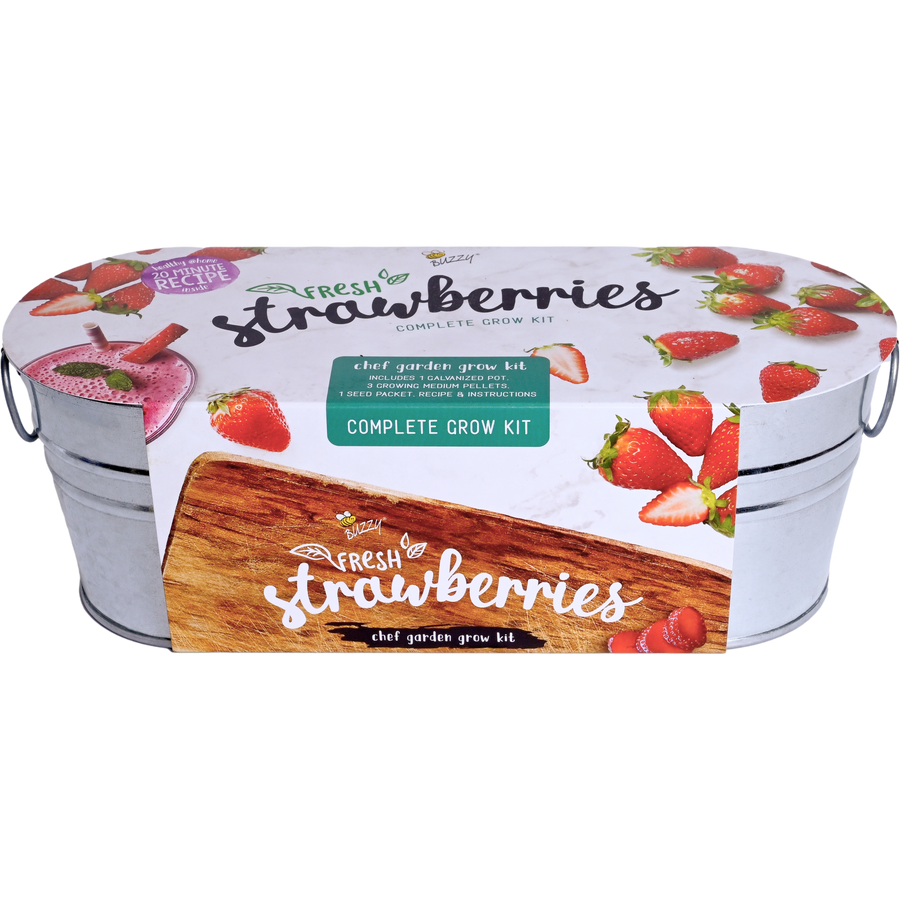
The Peppermint Grow Kit gives you six pots to play with. The Holiday Mint Grow Kit comes in two tins that make a nice gift.
Keep reading: How to Grow Basil from Seed · 7 Best Indoor Herb Garden Kits for Small Apartments · Growing Seeds Indoors in Winter · Grow Kits, Explained: What's in the Box
Sources
- Buzzy Seeds Peppermint Grow Kit and Holiday Mint Grow Kit (sowing method, water quantity, 14 to 21 days to germinate, 72 to 75 degrees, time to maturity, do not plant in ground)
- Iowa State Extension, Can I grow herbs indoors over winter? (four to six hours of direct sun; mint tolerates a little less light)
- Utah State Extension, Mint in the Garden (best planted in containers or where roots are confined; harvest once plants are 3 to 4 inches tall)
- Illinois Extension, Mint (highly suggested that mints be grown in containers above ground; new growth is the most flavorful)
- Clemson Home and Garden Information Center, Herbs (mint prefers partial shade; plant aggressive spreaders in a container)
- University of Maryland Extension, Growing Mint (12 to 16 inch container; runners; frequent harvesting encourages bushy growth)
- University of Maryland Extension, Growing in Containers (small pots dry out faster and restrict root growth; step up 2 to 4 inches)
- NC State Extension Plant Toolbox, Peppermint (grow in a 12 to 16 inch pot to control spread)
- UC Integrated Pest Management, Cultural Tips for Growing Mint (four to six hours of sun; keep the root zone moist; divide and repot)
- UC Master Gardeners Fresno, So You Want to Grow Mint (pinch off flowers to keep the flavor in the leaves; harvest at three to four inches)
- Oklahoma State Extension, Growing Herbs Indoors (at least five hours of sun; never remove more than a third of the plant at a time)
- Colorado State Extension, Growing Herbs Indoors (window aspect, keep leaves off cold glass, never cut more than a third, winter resting phase, weekly rinse)
- Montana State Extension, Herbs That Thrive Indoors (cut above a set of leaves for bushier growth; long and lanky means too little light)
- Penn State PlantVillage, Mint (harvest once plants reach 3 to 4 inches; pinch tips regularly)
- Royal Horticultural Society, Mint (the more you pick the more they produce; hard cut back to 2 inches)